
A letter chart answers one useful question: how clearly can you see today? It does not answer every question about the health of your eyes. During a dilated eye examination, an eye professional puts drops in your eyes to widen the pupils, making it easier to examine structures inside the eye. If you have been told you need this examination, knowing what the drops do and how to plan your journey home can make the visit much easier.
What does a dilated eye exam check?
The US National Eye Institute’s patient guide describes a comprehensive examination as a set of checks, not just one machine or one eye chart. The clinician may check distance and near vision, side vision, eye movements, pupil responses and eye pressure. Dilating drops widen the pupil so the clinician can examine the inside of the eye, including the retina at the back. Which additional tests are needed depends on the person and the findings.
This matters because some eye diseases can develop without obvious early symptoms. Clear vision on a chart is welcome, but it does not replace a clinical assessment of the retina and optic nerve when one is indicated. Dilation is an examination step, not a treatment or a promise that a disease will be found.
How is this different from getting glasses checked?
A refraction test works out whether the eye focuses light correctly and whether glasses could sharpen the image. A dilated examination looks more widely at eye health. You can need both: a new glasses prescription may explain the blur, while the eye professional still needs to check for a separate condition. Our guide to refractive errors and blurred vision explains the focusing side in more detail.
Likewise, a community or school vision screening can identify someone who needs a fuller assessment, but it is not interchangeable with that assessment. If you have a screening referral, take the referral and any glasses or previous reports to the appointment. Ask the examining clinician which tests are being recommended and why.
What happens at the appointment?
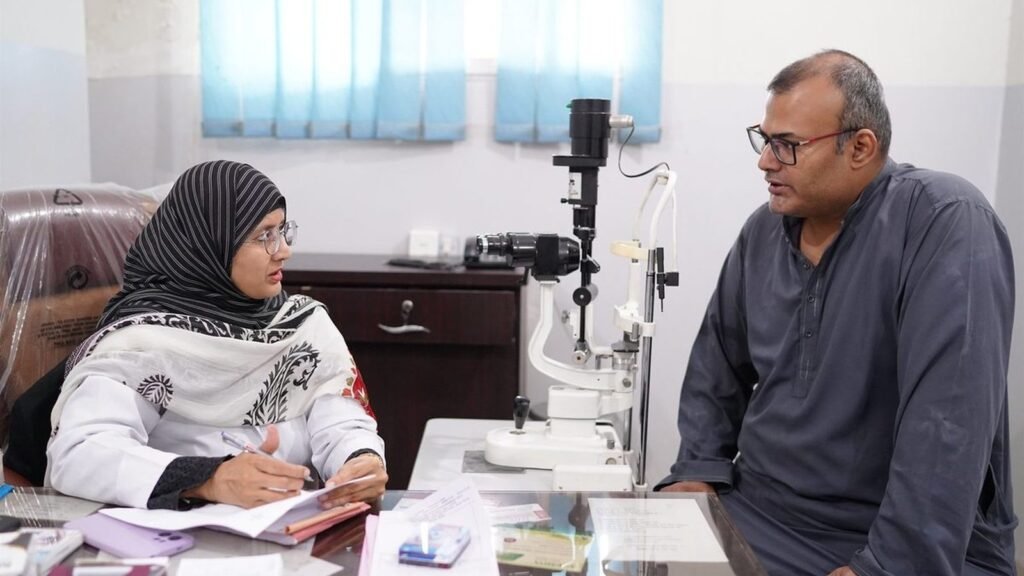
Expect questions about your vision and any eye problems, followed by the tests appropriate to you. The National Eye Institute lists reading letters near and far, checking side vision, following a moving object, looking at pupil reactions and measuring eye pressure among possible parts of a comprehensive exam. The drops then widen the pupil to give a better view inside the eye. This is a general description of an eye examination, not a guarantee that every PEBS patient receives every test.
Tell the eye team about medicines you take, previous eye procedures and symptoms that brought you in. Bring your current glasses and any previous eye prescriptions or reports if you have them. If you use contact lenses, ask the clinic whether to remove them before particular tests. If you are bringing a child or an older relative, it helps to have someone who can remember the clinician’s instructions and help with the trip home.
What might the clinician be looking for?
Looking through the widened pupil can help the clinician assess the retina and other internal structures. The National Eye Institute names diabetic retinopathy, glaucoma and age-related macular degeneration among conditions a dilated exam may help detect or assess. An eye pressure measurement is one part of the picture for glaucoma; pressure alone cannot settle whether someone has it. As the National Eye Institute explains, some people with high pressure do not develop glaucoma and some with normal pressure do.
If you live with diabetes, do not wait for blurry vision before discussing retinal examinations. Our article on diabetes and eye checks explains why the retina matters. Ask your treating clinicians how often your own eyes should be examined; an individual’s schedule depends on their health and examination findings.
Will the drops affect the journey home?
They may. The National Eye Institute says vision can be blurry and eyes sensitive to light for a few hours after dilation. Bring sunglasses if you have them, and arrange for someone else to drive or help you travel home. The exact duration can vary, so ask the clinician what to expect from the drops used at your visit. Avoid planning visually demanding tasks immediately afterwards if your vision remains blurred.
If you need to return to work, school or another appointment on the same day, tell the eye team beforehand. They can explain the examination plan and what might affect your day. Do not skip a recommended exam just because the drops sound inconvenient; organise the journey so that you can complete it safely.
Who should ask about a dilated examination?
Anyone concerned about a change in vision should ask an eye professional what kind of examination is appropriate. A personal or family history of eye disease, diabetes, or high blood pressure can also change the recommended follow-up. The National Eye Institute advises discussing examination frequency with your doctor because risk differs from person to person. A website cannot set the right interval for you, and a calendar reminder cannot replace the findings of a clinician who has actually examined your eyes.
If you already have an appointment for glasses or a screening result, ask whether the examination will include dilation and whether a separate visit is needed. If you were given drops previously and had a concerning reaction, tell the eye team before another examination. They need that history when planning your care.
What should not wait for a routine eye appointment?
A sudden loss of vision, a new curtain or shadow across sight, new flashes with many floaters, or a painful red eye calls for urgent medical assessment. These are not reasons to wait for a routine dilated exam slot. Seek an emergency department or urgent eye service promptly. The National Eye Institute’s floater guidance identifies a curtain or shadow and sudden new floaters or flashes as warning signs that need immediate attention.
For a non-urgent examination in Karachi, the PEBS Hospital page lists eye diagnostic services. Call the hospital first to ask when its eye service is running, whether a dilated examination is appropriate for your concern, and what to bring. The contact page lists its North Karachi location and reception details. The examining clinician, rather than this article, determines which tests you need and what the results mean.
Have a question about your eyes?
PEBS Hospital in North Karachi can examine you and explain your options. Call the helpline on 021-36908053, or send a message and the team will reply.
This article is general information and does not replace an examination by an eye doctor.
