
Retinal detachment is a medical emergency. A sudden increase in floaters, flashes of light or a dark curtain across vision needs immediate assessment. Go to an eye doctor or an emergency department right away. Do not wait for an online reply, a routine appointment or the symptoms to become more severe.
The retina lines the back of the eye and contains light-sensitive tissue. When it pulls away from its normal position, sight is at risk. Healthdirect Australia explains why prompt treatment matters for protecting vision. The information below is for understanding the condition, not deciding at home whether an urgent examination is necessary.
Recognise the change rather than count the symptoms
Floaters may look like small dark spots or moving lines. Some people already notice a few. What matters here is a sudden increase, especially when many new floaters appear. Flashes of light and a new shadow in the visual field are also warning signs.
The shadow may appear at the side or nearer the centre. People sometimes describe it as a curtain moving across their sight. Vision may no longer be as clear as usual. You do not need to see every symptom on this list before seeking urgent help.
The Healthdirect guidance on retinal detachment says the symptoms often develop quickly. Without prompt treatment, more of the retina can detach. That increases the risk of permanent sight loss or blindness.
An online checklist cannot establish what is happening inside the eye. A person with new warning signs should not reassure themselves by comparing symptoms with someone else’s story. Explain the change to the clinician and let the examination determine the next step.
What to tell the clinician when seeking urgent care
Say that there has been a sudden change in vision. Describe any new floaters, flashes or shadow and when it began. Explain which eye seems affected. Mention recent or previous eye surgery, an eye injury and any known retinal condition.
Use everyday words if medical terms are unfamiliar. A description such as a dark area at the side is useful. There is no need to name the type of detachment before asking for assessment. The examination is what establishes the diagnosis.
Bring information about previous eye treatment if it is readily available. Do not delay urgent care while searching for old paperwork or trying to complete a detailed symptom diary. A family member can help explain the history if needed.
If a previous visit found a different cause for floaters, explain that history too. It does not remove the need to report a new change. The important question is what is happening now, not whether all earlier episodes turned out to be serious.
Who has a higher risk
Factors such as ageing, eye injury, severe short sight and a family history of detachment can matter. Tell the clinician about previous eye operations and diagnoses as well. The history helps the examination; it is not a way to decide at home that urgent symptoms are harmless.
Other risk factors include severe short sight and diabetic retinopathy. Certain changes affecting the retina or the gel inside the eye can raise risk as well. Tell the eye doctor about diagnoses already given rather than trying to work out risk from glasses strength alone.
Having a risk factor does not mean a detachment is certain. Equally, having no known risk factor does not make sudden warning signs safe to ignore. Risk information helps a clinician assess the history; it should not be used as a reason to postpone urgent care.
At a routine visit, someone concerned about their risk can ask how often a dilated examination is appropriate. That planned discussion is separate from the immediate response needed for sudden floaters, flashes or a shadow.
How doctors examine the retina
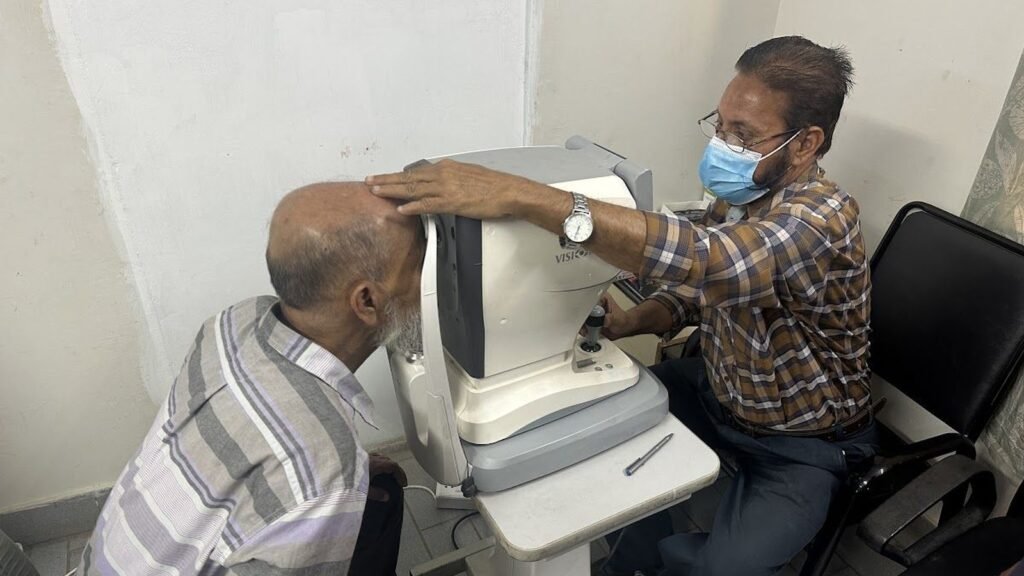
The clinician asks about the symptoms and examines the eyes. Drops may be used to widen the pupil and help the doctor see the retina. Explain any difficulties with previous examinations so the team can discuss what the assessment involves.
Ask whether further examination or imaging is needed before the treatment decision can be made. If a test is mentioned, ask what question it answers. The next step should follow the actual findings, rather than a list of investigations copied from another person’s experience.
The article on dilated eye examinations explains the broader purpose of widening the pupil. For an urgent retinal concern, ask what the examination found and whether treatment or specialist referral is needed immediately.
Keep the distinction between a suspected problem and a confirmed finding clear. An urgent referral means the eye needs timely assessment. It does not, by itself, tell you the size or type of any detachment. Those details come from the examination.
A tear and a larger detachment may need different treatment
A small retinal hole or tear may be sealed using a laser or freezing treatment. Freezing treatment is also called cryopexy. If a larger area has detached, surgery may be needed to put the retina back in place.
The plan depends on the type and extent of the problem. Sometimes more than one treatment is used. A procedure recommended to a friend may not be the right procedure for someone else. Ask the surgeon to explain the findings that led to the recommendation.
Useful questions include what the procedure aims to repair, when it needs to happen and what follow-up it requires. Ask about the expected benefits and risks in your own case. A general article cannot predict the amount of sight a particular person will regain.
A discussion about repairing the retina is separate from a prediction about the final quality of sight. Ask the surgeon to explain both. Avoid treating general statements about successful surgery as a guarantee that vision will return exactly to how it was before the problem.
Get the recovery instructions for your procedure
Before leaving after treatment, ask for clear written instructions. Confirm which medicines have been prescribed, when the next examination is due and how to obtain urgent advice. If anything is unclear, ask the treating team to explain it before travelling home.
Also ask about activities that matter in your daily routine. Mention work, lifting, exercise and any planned travel. Different operations can require different instructions, so another patient’s recovery advice is not a substitute for your own surgical plan.
This guide does not provide a recovery timetable or a positioning instruction. Those details need to come from the team that knows which procedure was performed. Keep the written plan accessible to anyone helping with care at home.
Report new visual symptoms according to the urgent advice given by the treating team. If a new curtain, flashes or sudden increase in floaters appears, seek assessment promptly. A history of treatment should not be treated as proof that a later change cannot be serious.
What prevention can and cannot do
Age-related changes are a common cause of retinal detachment, so it cannot always be prevented. Eye protection during risky activities can reduce the chance of an injury-related problem. Ask about appropriate protective eyewear for work or sport where eye injury is a concern.
Regular dilated examinations can identify some tears or small detachments before they affect sight. Discuss an examination schedule with an eye doctor. A routine review date is not a reason to wait when new warning signs appear between appointments.
The most useful action for symptoms is prompt care. Repeatedly searching for a harmless explanation can consume time without establishing what is happening inside the eye. An examination can answer the question that home observation cannot.
Make a referral handover clear
If one service sends you to another, ask where to go and how urgently the receiving team expects you. A written referral is useful, but do not delay urgent assessment while trying to assemble perfect records. Tell the receiving service who examined the eye and what you were told.
A family member can help with practical arrangements while the patient follows the clinical instructions. Agree who is handling transport, who has the referral and who is listening to the explanation. This can reduce confusion without adding another decision for someone worried about their sight.
If the destination changes, make sure the accompanying person knows the new plan. Do not assume that leaving a message or filling in a web form means an urgent referral has been accepted. Clarify the next step directly with the service handling the case.
Plan how questions will be answered after treatment
Before going home, identify the contact route for questions about the procedure and the route for an urgent change. They may not be the same. Keep the written instructions somewhere the person helping at home can find them, rather than in a bag that no one else knows about.
Ask for clarification if two instructions seem inconsistent. For example, a general leaflet may describe several operations while a separate note refers to the one performed. The treating team should explain which instruction applies. Do not select whichever version seems easier to follow.
Arrange practical help around the actual written advice. Tell the team about work commitments, caring responsibilities and transport difficulties. Ask what must be organised before discharge and what can be discussed at review. Avoid promising a return date to an employer before the clinician has addressed that question.
At follow-up, take the medication list and any questions about the home plan. Report difficulties honestly. The purpose is to make the plan workable and clarify the findings, not to show that recovery has matched another person’s experience.
Keep urgent care separate from routine enquiries
For general enquiries about retinal detachment, ask the hospital about routine retinal appointments. This must not replace an immediate visit to an eye doctor or emergency department when retinal warning signs occur.
For information about supporting PEBS, readers can use the published ways to support patient care. If a sudden shadow, flashes or many new floaters are happening now, arrange urgent assessment rather than waiting to see what tomorrow brings.
Have a question about your eyes?
PEBS Hospital in North Karachi can examine you and explain your options. Call the helpline on 021-36908053, or send a message and the team will reply.
This article is general information and does not replace an examination by an eye doctor.