
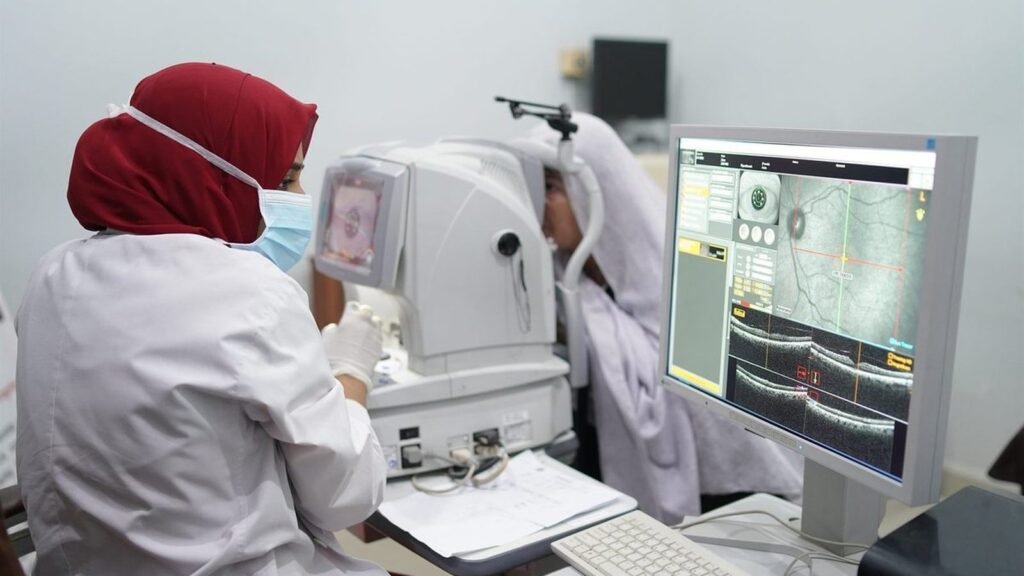
Diabetes is usually talked about in terms of blood sugar, diet and medicines. Its effect on the eyes can go unnoticed, because there may be no symptoms in the early years. One of the most important eye problems is diabetic macular oedema, in which fluid collects at the centre of the retina and blurs the sharpest part of vision. This guide explains what diabetic macular oedema is, who is at risk, how it is found and how it is treated, using the information from the Macular Society, a UK charity for people with macular disease.
What diabetic macular oedema is
The retina is the light-sensitive layer at the back of the eye. At its centre is the macula, the area used to read, recognise faces and see fine detail. When leaky blood vessels let fluid build up in the macula, the swelling is called macular oedema. When the cause is diabetes, it is called diabetic macular oedema, or DMO.
The Macular Society’s page on DMO says that it is the most common cause of sight loss in people with diabetes. It is a complication of diabetic retinopathy, which is damage to the retina caused by diabetes. The result is a condition very similar to wet age-related macular degeneration.
DMO is painless. It affects central vision, but it does not affect side vision. Other forms of diabetic retinopathy can affect the wider field of sight.
How diabetes damages the blood vessels of the eye
The eye needs a constant supply of blood to work properly. When blood sugar and insulin levels are poorly controlled, the blood vessels of the eye can become damaged. The vessels of the retina are especially prone to leaking, and that is how diabetic retinopathy develops.
The charity’s advice for people with diabetes is to reduce the risk of vision loss by going to their regular diabetic eye screening. A separate guide explains why a yearly retina check matters for anyone living with diabetes.
Why it can go unnoticed at first
In the early years a person with diabetes may not notice any effect on vision. Damage to the retina builds up over many years. When the damage only causes small bulges in the blood vessels of the retina, eyesight remains good.
The picture changes when the vessels in or near the macula are damaged, or when there is sudden bleeding or leaking of fluid into the macula. Sight can then get worse dramatically. This is why good vision on an ordinary day does not prove that the retina is healthy.
Signs that need attention
The charity lists the following changes in vision.
- Dark spots, like a smudge on glasses, or gaps, especially first thing in the morning.
- Objects that change shape, size or colour, or seem to move or disappear.
- Colours that fade.
- Difficulty with bright light or glare.
- Difficulty reading.
- Straight lines, such as door frames and lamp posts, that look distorted or bent.
A sudden change in vision is a reason to contact an optometrist or a hospital eye specialist urgently. If there are any vision problems in between appointments, the charity says to seek advice from the diabetes care team or a doctor immediately. Do not wait for the next hospital appointment.
Who is more at risk
The longer a person has had diabetes, the greater the chance of sight loss from DMO. Macular Society gives some figures for the United Kingdom.
- About 90% of people with type 1 diabetes will have some degree of retinopathy after 10 years.
- For people with type 2 diabetes, the chance of some retinopathy after 10 years is between 67% and 80%, depending on whether they need insulin.
- More than a third of all people with diabetes will develop a level of macular oedema that will need treatment unless lifestyle and blood sugar control improve.
- In total, about 7% of people with diabetes, or around one in 14, develop DMO that causes noticeable loss of vision.
Control matters. A high blood sugar level increases the risk of retinopathy, and the charity says small changes in the level can significantly affect the risk. A person who also has high blood pressure has a higher risk of advanced retinopathy.
How doctors find it
If DMO is suspected, the person is referred to the eye hospital for tests. The specialist may use three things.
- Dilating drops. These widen the pupils so the back of the eye can be seen clearly. The drops may make vision blurred and sensitive to light for a short time, so the charity suggests taking someone with you.
- An OCT scan. Optical coherence tomography gives a cross-sectional picture of the retina.
- Fluorescein angiography. A dye is injected into a vein in the arm. It travels to the eye and highlights the blood vessels of the retina so that they can be photographed. The dye temporarily changes the colour of urine.
A guide to what a dilated eye exam checks describes how an eye doctor looks at the back of the eye.
Treatment with injections
Macular Society states that DMO can be treated if it is caught early. The main treatment is a medicine injected into the eye to stop fluid leaking from the blood vessels. People usually have a number of injections in the first few months. After that, check-ups show when more injections are needed. The number and frequency depend on how the patient responds.
The idea of an injection into the eye frightens many people. The charity’s reassurance is practical. The injections are not as bad as they might sound. The eye is numbed, and the needle goes in at the corner of the eye, so the patient does not see it. They are called intravitreal injections.
Two points deserve emphasis. First, the treatment cannot restore sight if there is already significant damage to the macula. Second, the charity says not to miss a treatment session, because any sight that is lost cannot be recovered. If you cannot attend a booked session, ask the clinic for another date as soon as possible.
Laser treatment
Some people are offered laser treatment when the swelling does not involve the centre of the macula. Its aim is to stabilise vision, and it does not generally improve sight. It usually involves one or more visits to an outpatient laser clinic.
Before the treatment, local anaesthetic is put on the surface of the eye, and drops widen the pupil. A special contact lens holds the eyelids open and lets the laser beam be focused on the retina. The treatment is not usually painful, but there may be a sharp pricking sensation.
Protecting your eyes every day
Diabetes is a lifelong condition, and the charity says that a healthy lifestyle and regular monitoring of blood sugar, blood pressure and cholesterol are essential to avoid damage to the eyes.
- Check your blood sugar regularly, and aim to keep within the limits your doctor or nurse recommends.
- Keep to a healthy weight and a healthy blood pressure.
- Eat plenty of fruit and green vegetables.
- Take regular exercise.
- Do not smoke.
It is also essential to attend diabetes clinic appointments, so the care team can look after the diabetes care plan. The charity says to make sure the eyes are screened at least once a year to spot problems early. People who wear glasses or contact lenses should keep seeing their optician, and tell the optician that they have diabetes.
Managing daily life with central vision loss
Loss of central vision can be frustrating and can greatly affect everyday life. The charity suggests that people can make the remaining vision more comfortable by wearing lenses that block UV and blue light and reduce glare. A hat with a brim or visor helps to shade the eyes from direct sunlight.
Some people with DMO see images that are not there, such as people, animals, scenery or patterns. This is called Charles Bonnet syndrome. People who have not heard of it often worry that they are developing a mental health problem. The charity explains that it is a normal response of the brain to sight loss. As fewer messages reach the brain, the cells that normally process vision can create images of things that are not there. The images may happen once or twice, or continue for several years.
Questions to ask the eye team
- Is there fluid at my macula, and in which eye?
- Do I need injections or laser, and how often will I be seen?
- What should I do if my sight changes between appointments?
- Who can help me to keep my blood sugar and blood pressure under control?
- When should my next retina check be?
Related reading on other eye conditions sits in the eye care and treatment section.
Next steps
If you have diabetes and cannot remember your last eye check, book one. For questions about diabetic eye checks for yourself or a relative, ask PEBS about diabetic eye checks. Anyone who wants to give can review instructions for donating to the hospital.
Fluid at the macula can be treated when it is found early, but sight lost to it cannot be recovered.
Have a question about your eyes?
PEBS Hospital in North Karachi can examine you and explain your options. Call the helpline on 021-36908053, or send a message and the team will reply.
This article is general information and does not replace an examination by an eye doctor.
