
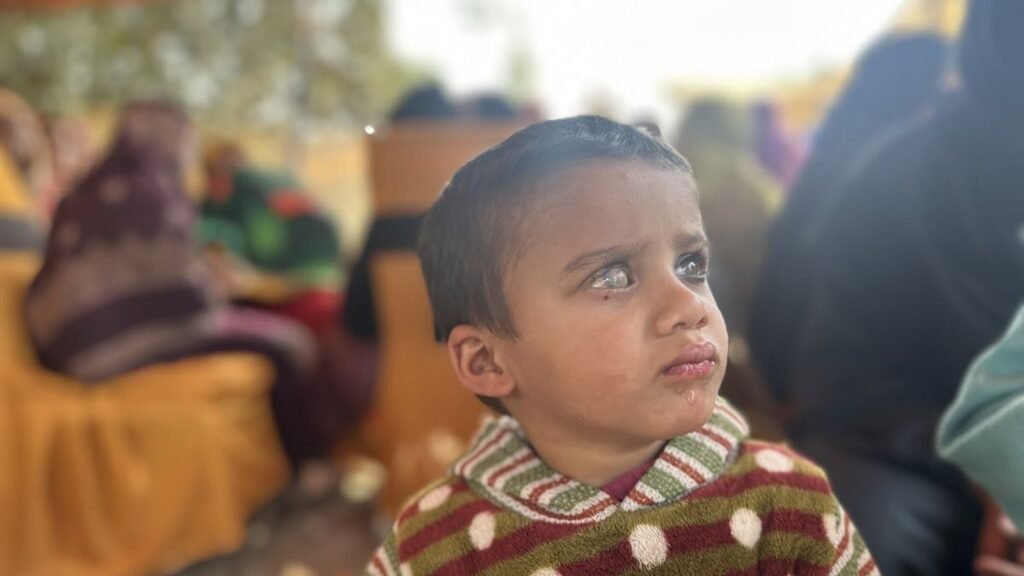
Congenital cataracts are cloudy areas in a baby’s natural eye lens. Some are present at birth; others develop very early. A cataract can affect one eye or both. The main question is whether it prevents clear images reaching a visual system that is still learning to see. Assessment should happen promptly when a baby’s sight is in doubt.
A baby’s vision is still developing
Seeing is more than having an open eye. The eyes gather information and the brain learns to use it. Clear images help those connections develop during childhood, with the earliest months especially important.
If an image stays blurred by a cataract, the brain may not learn to use that eye well. When one eye sees more clearly, the brain can favour it. The weaker eye may develop amblyopia, often called lazy eye.
This is why childhood cataract care differs from a familiar story about an older relative’s operation. Timing and treatment after surgery relate to visual development. A baby cannot explain that one image looks less clear than the other.
Not every cataract needs the same response
The location, size and density of the cloudy area matter. A small cataract away from the centre may affect sight less than a dense central one. Some do not need an operation.
An ophthalmologist assesses how much the cataract interferes with vision. The plan may involve monitoring or surgery, with other treatment to help development. The word cataract alone does not settle the decision.
Ask what the examination shows in each eye. Ask why the proposed timing is appropriate. If monitoring is advised, confirm the review date and what change would lead to a different plan.
What parents may notice
Possible signs include difficulty focusing on objects, an eye turn, repeated uncontrolled eye movements or an unusual head position. These signs can have different causes and need assessment.
Usually, parents cannot see the cataract simply by looking at the eye. A very dense cataract may make the pupil appear white. A white pupil can also indicate other serious conditions and needs urgent medical review.
Do not wait for a visible white pupil before raising concerns. Describe any uncertainty about the baby’s sight to a doctor. For older children, our guide to signs of visual difficulty covers clues that may appear in everyday activities.
Questions about the cause
Sometimes no cause is found. A cataract in one eye may occur without another known problem. Cataracts in both eyes are more likely to have a family connection or an association with another condition.
The eye specialist may ask about family history and recommend examinations of relatives. A parent can have a small cataract without knowing, if it does not interfere with sight. Some children also need a paediatric assessment.
Ask which investigations are relevant to your child. Avoid assuming that a cause must be known before care can begin. The immediate plan for vision and the investigation into why the cataract formed can involve separate questions.
When surgery is considered early
A cataract that seriously obstructs a baby’s vision may need removal early in life. The purpose is to allow clearer visual information to reach the developing brain. The specialist explains the balance of benefits and risks.
A child with cataracts in both eyes may need treatment to both, sometimes close together. The timing depends on the individual findings. A cataract affecting one eye can also need early treatment, even if the other eye appears to see well.
Ask how the proposed operation fits into the larger plan. Surgery removes the cloudy lens. It does not by itself complete the work of teaching the brain to use the eye.
Replacing the lens’s focusing function
The surgeon removes the cloudy natural lens under general anaesthetic. An artificial lens inside the eye may be appropriate for some children. Others, especially very young children, may use a contact lens instead.
The choice is individual. Age, the condition of the eye and the expected visual needs are part of the discussion. Ask why the team recommends one option and what care it will require at home.
Even with an implanted lens, glasses or contact lenses may still be needed. A replacement lens does not adjust focus in the same way as a natural lens. Different distances can therefore require additional correction.
Learning the home routine before discharge
Ask the clinical team to demonstrate the prescribed eye care. This may include drops, a protective shield and keeping water or shampoo away from the healing eye. Follow the child’s own instructions rather than an adult relative’s routine.
If you cannot manage the drops, say so before leaving. Ask for another demonstration and a written schedule. Our general guide to safe eye drop handling can support, but not replace, the team’s advice.
Confirm who to contact out of hours. The person helping at home should have the same directions. A shared written record makes it easier to know which medicine was given and which instruction is current.
After surgery, know when to call
RNIB advises immediate contact with the hospital for concerning swelling, bleeding, marked stickiness, redness or apparent pain after a child’s surgery. Ask the surgeon where the child should be seen if a problem develops.
A baby cannot describe pain clearly. Explain the changes you have noticed rather than trying to label them yourself. Do not wait for the next routine review when the surgical team has advised urgent contact.
Keep the discharge information available during the call or visit. It tells the receiving team what procedure happened and which medicines were prescribed. This is particularly helpful if the usual clinician is not available.
Patching may be part of treatment
Covering the better-seeing eye can encourage the brain to use the weaker eye. This is called occlusion therapy. It is commonly supervised by an orthoptist, who works with how the eyes function together.
Use the exact schedule given. Extra patching is not automatically better and can interfere with the development of the stronger eye. Do not borrow another child’s timetable.
Patching can be difficult for both parent and child. Tell the team about the problem rather than quietly abandoning treatment. Ask whether a different patch type, an enjoyable activity or another approach could help follow the prescribed plan.
Glasses and contact lenses need continuing review
A growing eye can need changes to its prescription. Follow-up checks help ensure that the correction remains appropriate. Contact lens care also needs clear training and a replacement plan from the eye team.
Ask what to do if a lens is lost or glasses break. Knowing the contact route in advance is useful. Do not guess a replacement strength from an older prescription.
Tell the clinician how the child actually uses the correction at home. A prescription on paper and a lens worn successfully are different things. Practical difficulties belong in the consultation because they affect the treatment plan.
Thinking beyond the operation
Results vary according to the cataracts, timing, other eye conditions and ongoing care. Some children retain reduced vision. Others develop good useful sight with treatment and follow-up.
Ask what can be assessed now and what will become clearer as the child grows. School support should match the child’s visual needs. An operation date alone does not predict those needs years later.
When another adult cares for the child, show them the current lens, drop and patching instructions. Keep old instructions separate so they cannot be mistaken for the latest plan. Ask the clinic to clarify any difference between written advice and what you remember hearing.
The medical basis for this guide is RNIB’s information about congenital cataracts. For a question about your child, use the PEBS enquiry page for congenital cataracts. Giving enquiries can begin on the donate page.
Ask the team to explain the next stage of care before each visit ends, so treatment remains a workable routine for your family.
Have a question about your eyes?
PEBS Hospital in North Karachi can examine you and explain your options. Call the helpline on 021-36908053, or send a message and the team will reply.
This article is general information and does not replace an examination by an eye doctor.