
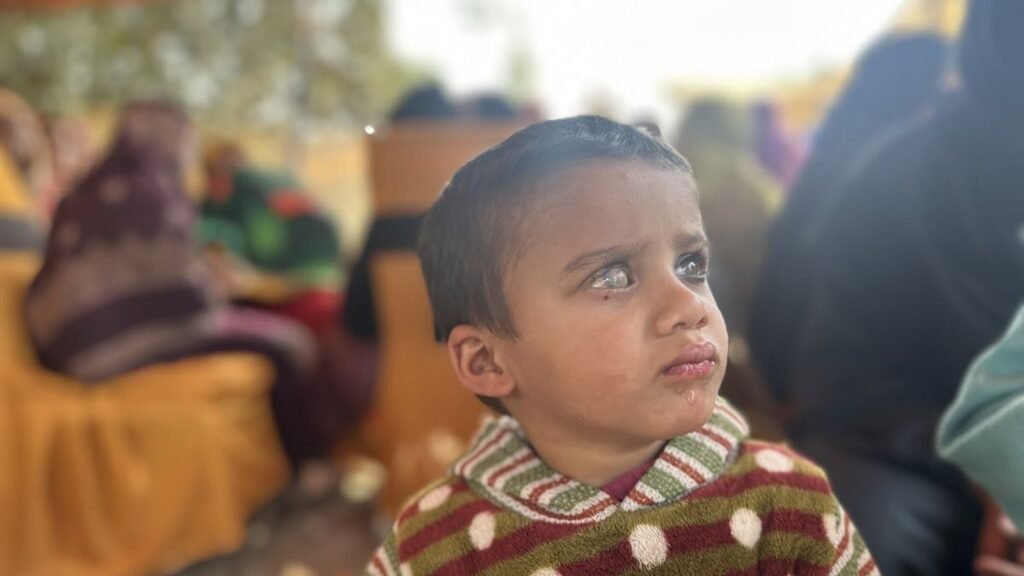
A blocked tear duct in babies can cause one or both eyes to water even when the baby is not crying. Tears may pool near the nose, spill onto the cheek or leave crust on the lashes. An examination matters because sticky eyes can have causes other than a blocked duct.
AAPOS guidance on blocked tear ducts explains that most infant tear duct blockages clear during the first year of life. The guide also describes signs, examination and when a procedure may be considered. This article summarises that information, but it cannot assess a particular baby. An eye clinician should check symptoms that are severe, unusual or not improving.
How tears normally drain
Tears keep the eye surface moist. They drain through tiny openings near the inner edges of the upper and lower eyelids. Small channels lead to the tear duct, which carries tears into the nose. When that pathway is blocked, tears can pool on the eye and spill over onto the cheek.
The medical term for a blocked tear duct is nasolacrimal duct obstruction. The most common cause in babies is a thin membrane near the lower end of the duct. The American Association for Pediatric Ophthalmology and Strabismus calls this the valve of Hasner. It is present in many newborns and often opens shortly after birth.
Other causes are less common. The puncta or the channels may be missing or narrow, infection can contribute, or the duct may not have connected with the nose as expected. A doctor needs to examine the baby to distinguish these possibilities.
Signs parents may notice
A blocked duct often becomes noticeable in the first weeks of life. One or both eyes may water throughout the day. Tears can collect at the inner corner or spill onto the skin. There may be crust on the eyelashes, sticky discharge, or eyelids that seem stuck together after sleep.
Symptoms can come and go. A cold or nasal congestion may make watering more noticeable because swelling inside the nose can affect drainage. Wind and cold weather can also make tears run. The pattern helps the clinician, but it does not confirm a diagnosis on its own.
AAPOS says more than 5% of infants have symptoms in one or both eyes. The figure describes a group, not an individual baby. A clinician can explain whether the symptoms and examination fit a simple blockage or need another assessment.
Discharge can appear yellow or green because normal bacteria remain on the eyelid rather than being washed away by tears. That appearance alone does not tell a parent whether the baby needs antibiotics. The eye and the surrounding area need to be assessed, especially if they are red, sore or swollen.
What the eye clinician checks
The clinician will ask when the watering began, whether it affects one or both eyes, and whether there has been redness or discharge. They may look at the eyelids, the eye surface and the area beside the nose. A history of symptoms starting early in life can support the diagnosis, but the clinician still needs to consider other causes.
When preparing for a visit, note when the watering began, whether it is on one side or both and whether redness or swelling has appeared. Tell the clinician about colds, discharge, a change in comfort or any swelling near the nose. The PEBS School Eye Clinic page provides general information about child vision; it is not a diagnosis for a baby’s tear duct.
The AAPOS guide notes that childhood glaucoma is one of the less common but more serious conditions that can also cause tearing. That is one reason an eye examination matters when symptoms persist or seem unusual. A family should not try to distinguish glaucoma from a blocked duct by looking at the eye at home.
It may help to write down what you notice before the appointment. Note whether the tears appear all day or mainly during a cold, whether the eyelid is stuck after sleep and whether the baby seems uncomfortable. A short record is easier to discuss than a guess about the cause.
What happens in most cases
Many blocked tear ducts open without an operation during the first year of life. AAPOS reports that about nine in ten clear during this period. The clinician may recommend observation and explain what changes should prompt an earlier review. The plan depends on the baby’s symptoms and examination.
Observation should come with a clear review plan. Ask when the baby should be checked again, which changes call for an earlier visit and what the clinician expects to happen if the duct opens on its own. If the eye becomes red or swollen, or the baby seems unwell, do not wait for a routine review.
If a clinician recommends massage, ask them to demonstrate the exact position and pressure. AAPOS describes firm downward pressure over the duct at the inner corner of the eye. Do not press on the eyeball. Wash your hands first, keep the baby safely supported and follow the clinician’s instructions for how often to do it.
The massage is directed over the tear duct, not across the eyeball. If the clinician demonstrates it, ask them to check your hand position and pressure before you try it at home. Stop and seek advice if a painful red swelling develops. Massage is not a substitute for urgent assessment when infection is suspected.
Do not begin antibiotic drops or ointment from a previous illness or from another child’s prescription. AAPOS explains that these medicines may be used when discharge or crusting is significant, but they control infection rather than opening the duct. Long-term use is discouraged. A clinician should decide whether a medicine is needed and how it should be used.
When a procedure may be discussed
If the blockage has not improved by around twelve months, or symptoms are severe, the eye doctor may discuss probing. A thin probe is passed through the duct to open the blockage. Depending on the child’s age and the examination, the procedure may be done in a clinic or an operating room. The clinician should explain which setting is suitable and why.
Some ducts need another approach, such as irrigation or a small tube. A more complex operation is uncommon. The choice depends on where the blockage is and whether an earlier attempt helped. Parents can ask what the procedure involves, what type of anaesthetic is planned, how to prepare and what follow-up is needed.
AAPOS notes that some ophthalmologists may probe infants under one year in the office with numbing drops, while older children usually need general anaesthesia in an operating room. The clinician may widen the duct with irrigation or a balloon, or place a small tube to help keep it open. These are options, not a plan for every child.
If an initial attempt does not work, probing can often be repeated. A more complex operation to create a new drainage route is rare. Ask which part of the duct is blocked, why a particular procedure is being suggested and what signs should prompt a call after treatment.
A procedure is not automatically the next step at a set birthday. The doctor weighs the symptoms, the child’s age and the examination findings. Ask what improvement the team expects and what it would mean if watering returns.
Signs that need prompt medical attention
A rare tear duct infection called dacryocystitis can be serious. AAPOS describes a painful, red, swollen bump near the inner corner of the eye, yellow-green discharge, fever or unusual tiredness as warning signs. These symptoms need urgent medical assessment. Do not wait for a routine appointment if the baby appears unwell or the swelling is painful.
A bluish swelling beside the nose may be a dacryocele. If the blockage affects more than one part of the duct, fluid can become trapped. AAPOS notes that a cyst inside the nose can affect breathing, especially when both sides are involved. A clinician should assess a baby with a swelling near the inner corner or any breathing difficulty.
Seek advice if the eye becomes increasingly red, the eyelids swell, the baby seems to have pain, or the symptoms change suddenly. The clinician can determine whether this is still a simple blockage or another condition. Never put unprescribed drops, breast milk or household remedies into a baby’s eye.
Questions to take to the appointment
- Does the examination support a blocked tear duct, or should another cause be checked?
- What signs should make me contact the clinic sooner?
- If massage is advised, can you show me exactly how to do it?
- Should any drops be used, and what do they treat?
- When should we review the symptoms if they continue?
- If probing is discussed, what will happen before and after the procedure?
The hospital services page lists broader information about PEBS. To ask a PEBS question, use the blocked tear-duct enquiry page. Readers who wish to support the organisation can visit the donate page. For a baby with persistent or worsening symptoms, the next step is an examination by a qualified eye professional, not a diagnosis from an article.
Have a question about your eyes?
PEBS Hospital in North Karachi can examine you and explain your options. Call the helpline on 021-36908053, or send a message and the team will reply.
This article is general information and does not replace an examination by an eye doctor.