
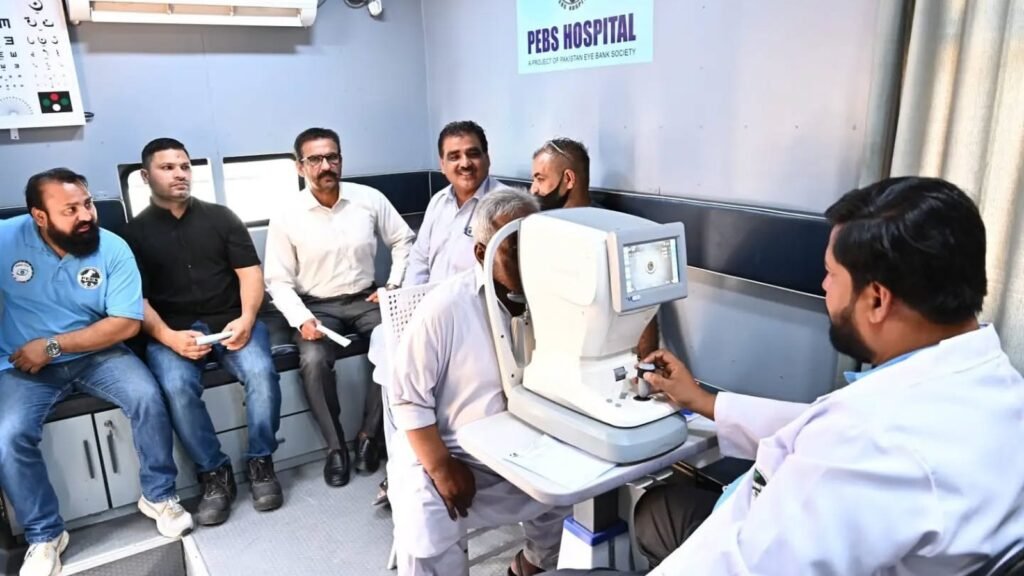
An eye pressure test measures the pressure inside your eye. The clinical name is tonometry. A clinician may include it in an eye examination or perform it as a separate screening step before your consultation. There is more than one way to take the measurement, so the experience can vary. Some tests use a short puff of air. Others use a small probe or a device that gently touches the front of the eye.
Knowing which method your clinic uses can make the appointment easier to picture. The measurement is one piece of information about eye health. It can help an eye specialist detect or monitor glaucoma, but it does not explain every symptom or settle every diagnosis on its own. Your clinician will interpret it alongside the rest of the examination and your history.
What an eye pressure test measures
Tonometry measures intraocular pressure, often shortened to IOP. The test assesses the pressure of fluid inside the eye. The clinician positions you at an instrument or uses a handheld device, depending on the method. You may be asked to look at a target and keep your head still while the reading is taken.
The test does not photograph the retina or measure how clearly you see letters. It answers a more specific question about pressure. Other checks look at different parts of the eye, so it is normal for an appointment to include several procedures. If the team has not explained what a device is for, you can ask before the measurement begins.
There is no single machine used in every clinic. A hospital may have more than one method and choose between them according to the appointment and the patient’s needs. A reading from one technique should be understood in the context of how it was taken. If you have had pressure measured before, tell the clinician where and when if you know.
Why clinicians check eye pressure
Eye pressure is an important factor when clinicians look for glaucoma and monitor it over time. Glaucoma can damage the optic nerve, and a person may not notice a change at first. A pressure measurement gives the eye team useful information, especially when it is compared with other findings and earlier visits.
A single reading is not the whole assessment. The clinician may also examine the optic nerve, ask about changes in vision, or recommend tests that assess the retina or visual field. A result that concerns you should be discussed with the clinician who knows your examination. For more about glaucoma and why follow-up matters, read PEBS guidance on glaucoma.
Pressure testing can be repeated at later visits. Comparing readings can help the specialist follow a pattern, but the numbers need context. The measurement method, the condition being assessed and other examination results all matter. Do not change treatment or assume that a result guarantees a particular outcome based on an online explanation.
Three ways tonometry may be done
Common methods include an air-puff test, a handheld rebound test and applanation tonometry. The name of the method may sound technical, but the staff can explain what they will do in simple terms. Each method takes a pressure measurement in a different way.
- Air-puff tonometry: You sit at a machine while a small puff of air is directed towards the eye. The instrument measures how the eye responds, without touching it. The puff lasts only a few seconds. Many people recognise this as the air-puff test.
- iCare rebound tonometry: A small handheld instrument uses a tiny probe that briefly touches the cornea and rebounds. The device takes six measurements. The Moorfields guide describes this method as using no air and no numbing drops.
- Applanation tonometry: The clinician applies numbing drops and then gently touches the surface of the eye with a measuring device. This is a contact method. The Moorfields guide describes it as a precise way to measure pressure, including in some people with irregular corneas or certain eye conditions.
These examples describe methods used at Moorfields Private. Your clinic may use another instrument or follow a different sequence. The important point is that the test is designed to measure pressure, even though the equipment and sensation are not identical.
What happens during the appointment
Some screening procedures happen before you see the consultant, while others form part of the consultation. The staff member may ask you to sit at a machine, place your chin and forehead against supports, and look towards a target. Follow the instructions at a comfortable pace. If you are unsure where to look or how still to stay, ask the staff member to guide you.
For an air-puff test, the machine directs a brief puff towards the eye. For a handheld rebound reading, the practitioner brings the small device close to the eye so its probe can take a series of measurements. With applanation, numbing drops are used before the measuring tip gently contacts the eye. The approach depends on the method selected for your examination.
Tell the clinician if you are anxious, find it difficult to keep your head still, or need the instructions repeated. You can ask what will touch the eye and whether drops will be used. The team can explain the steps before starting. If you feel uncomfortable during the test, let the practitioner know rather than trying to guess whether you should continue.
What the test may feel like
The air-puff method does not touch the eye, but the sudden puff can make you blink or startle. The machine takes a reading quickly, and the source guide says the puff itself takes only a few seconds. If the first attempt does not work because you blinked or moved, the staff member may ask you to try again.
With iCare, a tiny probe briefly touches the cornea to collect measurements. The guide describes the method as using no drops or air. Applanation uses numbing drops, followed by a gentle contact measurement. People can experience procedures differently, so a description cannot promise exactly what you will feel. Ask the clinician to talk you through the method planned for you.
If a drop is part of the test, you can ask its name and why it is being used. Some appointments include other drops for different examinations. For general information about using prescribed drops, see the PEBS guide to putting in eye drops safely. Use medication only as directed by your own eye team.
How to understand the result
The clinician records a pressure reading and considers it with the reason for your appointment. The number alone cannot tell you whether glaucoma is present or absent. An eye specialist interprets it alongside the appearance of the eye and any other tests needed for your situation. If you receive a result without an explanation, ask what it means for your care plan.
Ask whether the measurement needs to be repeated and when the team wants to see you again. If you have earlier results, the clinician may compare them with the current reading. A change can be useful information, but the meaning depends on the whole assessment. Do not compare your result with another person’s number as if both were taken under the same circumstances.
If the clinician recommends another examination, ask what it checks and how it relates to the pressure reading. A dilated eye examination lets the clinician view structures at the back of the eye. Other tests can assess different functions. Each one adds information, and no single screening result should replace the advice of the clinician examining you.
Questions to ask your eye team
You do not need to know the technical name of a device to ask a useful question. A short conversation can clarify why the test is being done and what the next step will be. If you have trouble remembering information during appointments, write down your questions in advance or ask whether you may bring someone with you.
- Which type of tonometry are you using today?
- Will the test use air, a probe, numbing drops or another method?
- What does this reading mean alongside the rest of my eye examination?
- Do I need a repeat measurement or another test?
- When should I return, and who should I contact if I have a question?
Ask the clinician to explain unfamiliar terms in plain language. If you are being monitored for glaucoma, confirm the date and purpose of your next review. Keep any appointment instructions somewhere you can find them. The clinic can tell you how to reach the right service if you need help understanding the plan.
Where tonometry fits in an eye check
An eye pressure test is one component of care, not a complete eye examination by itself. The specialist may combine it with a vision check, an examination using a bright slit lamp, imaging or a field test. The sequence depends on the reason for the visit. Each procedure looks at a different part of eye health or visual function.
If you have an upcoming appointment, the clinic can tell you which tests are planned and whether there is anything you need to know beforehand. For questions about booking or the services available, use the eye-pressure testing enquiry page. Bring previous eye records if the clinic has asked for them, and follow instructions from the team responsible for your care.
When you leave, make sure you understand the result in the context of your examination and know whether another visit is planned. If you are unsure what the clinician recommended, ask for the plan to be repeated or written down. Clear instructions help you keep follow-up on track and avoid making treatment decisions from a number without clinical guidance.
For a patient-facing description of common hospital eye tests, including air-puff, iCare and applanation tonometry, read Moorfields Private’s guide to hospital eye tests. The guide describes those methods at that hospital. Your clinician can explain which method is used locally and what your own reading means.
Have a question about your eyes?
PEBS Hospital in North Karachi can examine you and explain your options. Call the helpline on 021-36908053, or send a message and the team will reply.
This article is general information and does not replace an examination by an eye doctor.
