
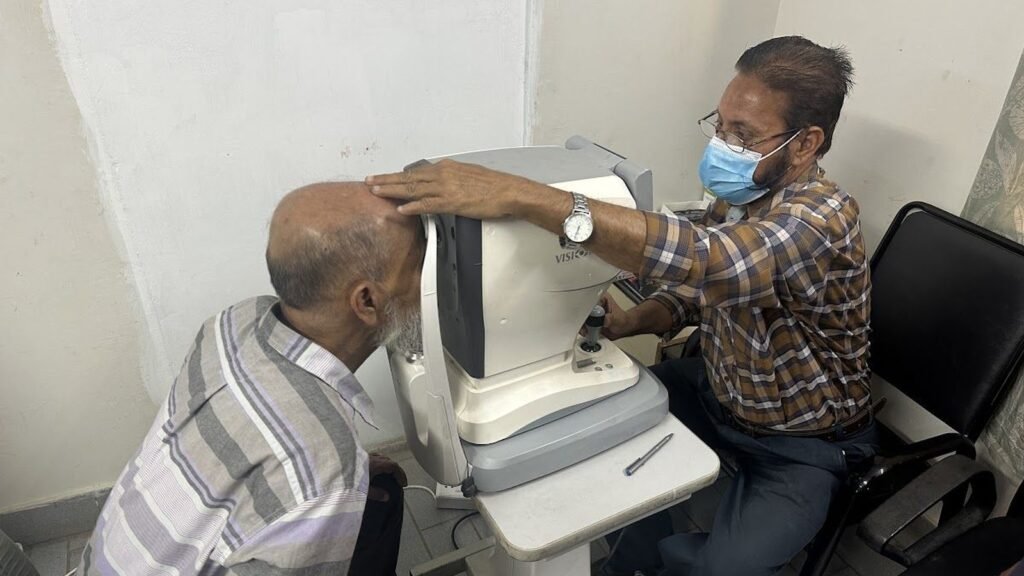
A drooping eyelid, called ptosis, may change appearance or block part of the upper field of vision. The cause varies, so a photograph or mirror cannot confirm what is happening. An eye examination measures the lid, checks how its lifting muscle works and assesses whether sight is affected.
Cambridge University Hospitals patient information on adult ptosis correction explains that an assessment looks at the amount of droop, how the lifting muscle works and whether vision is affected. Its guide is about adults being considered for surgery. It is a practical reference for what ptosis means, but it cannot decide what is causing a particular person’s eyelid to droop. A clinician needs to examine the eye and eyelid.
What ptosis means
The upper eyelid is lifted by a muscle and its tendon. When the lid sits lower than expected, a person may call it a droopy eyelid. The lid can cover a small part of the pupil or extend further down. The position can affect the upper part of the visual field, especially when someone looks straight ahead.
Some people raise their eyebrows to lift the lid. Others tilt their head back or use a finger to move the lid while reading. These habits can be clues that the eyelid is interfering with a task. They do not show what caused the droop. Mention when you notice the change and what you do to see more comfortably.
A comparison with the other eye can help describe a difference, but the two sides are not always identical. A drooping lid may affect one eye or both. The degree can vary with time of day, tiredness or other factors. An eye professional can measure the lid rather than relying on a casual comparison.
Why an eyelid may droop
Ptosis can be present from birth, although the Cambridge University Hospitals guide describes this as less common. In a congenital case, the eyelid lifting muscle may not have developed as expected. The condition is more common in adults, when the muscle or its tendon can thin or stretch with age.
Other causes can include long-term contact lens wear, injury and, less commonly, a tumour or a problem involving nerves or muscles. These causes need different assessment. A person should not assume that a new droop is simply a sign of ageing, particularly if the eyelid changed after an injury or appeared with another health concern.
Tell the clinician when the droop began, whether it is changing, and whether one or both eyelids are involved. Mention previous eye operations, contact lens use, injury and other symptoms. A clear history helps the clinician decide which parts of the examination are needed.
How a low lid can affect daily tasks
If the lid covers part of the pupil, it can obstruct the upper part of vision. A person may find it harder to look ahead without lifting the chin or raising the brows. Reading, walking down steps or noticing objects above eye level may feel different. The amount of impact depends on the position of the lid and the person’s sight in each eye.
Some ptosis is mainly a visible change. Other cases affect function. A person can have both concerns at once. Explain the specific task that has become harder. ?My eyelid looks different? and ?I cannot see the upper part of the page unless I lift my brow? describe different effects and help frame the appointment.
For a child, a low eyelid should be assessed rather than judged only by appearance. Tell the clinician if the child changes head position, raises the brows, or seems to miss objects in part of the view. The school eye clinic information on the PEBS school eye clinic page describes the site’s school eye clinic information; families should still ask an eye professional about an individual child.
What the examination may include
The clinician examines the eyelid and the eye. The Cambridge University Hospitals guide describes measurements of how far the lid droops and how well the lifting muscle works. A visual field test may be used to see whether the lid blocks part of the view. The clinician may also check how the eyes work together and whether another condition could explain the change.
Cambridge University Hospitals describes measurements of the lid and lifting muscle plus a visual field test to show whether sight is affected. The decision is based on examination findings, not appearance alone. Some cases are not suitable for surgery, so ask what the test can and cannot establish.
Bring glasses or contact lens details if you have them. If the droop changes, a dated note or photograph can help show when it is most noticeable. Do not delay an appointment to collect photographs if the change is concerning. A professional examination remains the way to assess the lid and vision.
Ask what the test results show in plain language. If the assessment finds that sight is not being obstructed, the clinician may discuss observation or another plan. If the lid affects vision, ask which treatment is suitable and what it is meant to improve. A measurement is only one part of deciding what to do.
When treatment is discussed
Treatment depends on the cause and on how much the lid affects the person. Some people do not need an operation. Surgery may be considered when the droop affects vision and the examination supports it. The Cambridge patient guide notes that the decision depends on the severity of ptosis and how much it interferes with sight.
For adults who are suitable for surgery, the hospital describes an operation that adjusts the eyelid lifting muscle. That is one centre’s method, not a promise that every patient will have the same procedure. The clinician should explain the proposed approach, the expected result and other options before a decision is made.
Cambridge University Hospitals describes adult ptosis surgery as a day case under local anaesthetic. In its method, the surgeon shortens the eyelid lifting muscle through a skin crease or, in some cases, from inside the lid. The lid height and shape may be adjusted during the operation. Another hospital may use a different approach.
Surgery has possible complications. The patient guide lists bruising, swelling, infection, an eyelid that remains too low or becomes too high, changes in eyelid shape, dryness if the eye does not close fully, and the possibility of further surgery. The likelihood and relevance of each risk depend on the person. Ask which risks matter most in your case and how the team would handle them.
Cambridge University Hospitals reports that its surgeons are satisfied with the lid height in about 80 to 90 per cent of cases, while over-correction occurs in roughly 10 to 20 per cent. These figures come from that centre’s patient guide. They do not predict one person’s result or another hospital’s outcomes. Ask what results and repeat-procedure rates apply where you are treated.
Preparing for an appointment
Write down the questions you want answered. A short list can keep the discussion focused if the visit feels rushed. Useful questions include:
- What is the likely cause of the drooping eyelid?
- Does the lid block any part of my vision or my child’s vision?
- What measurements or field test will help answer that?
- Is monitoring appropriate, or is treatment being considered?
- If surgery is an option, what result is realistic and what are the main risks?
- When should the eyelid be checked again?
Bring a list of medicines and eye treatments. Tell the clinician about previous operations, contact lenses and any injury. Do not stop a prescribed medicine before surgery unless the prescribing clinician has confirmed that it is safe. Changes to medicines need to be planned with the people who manage them.
Recovery and follow-up
If an operation is planned, ask how long the visit will take, what help you need at home and when you may return to normal activities. The adult patient guide describes follow-up after surgery and notes that swelling and bruising can occur. Instructions vary with the procedure, so use the written advice from your own team.
Contact the service that treated you if you are unsure whether a symptom is expected. Ask what number to use after clinic hours and what changes should be reported. Do not rely on another patient’s recovery timetable. A different technique or health history may change the advice.
The Cambridge guide says swelling and bruising may last 10 to 14 days and the first review is usually after one week. It also notes that ointment can temporarily blur vision. Ask the treating team when it is safe to travel, drive and return to usual activities based on your sight.
After treatment, keep the review appointment even if the lid looks improved. The clinician can check healing, closure and the position of the lid. Tell them if the eye feels dry, if the lid does not close comfortably or if the view is still obstructed.
Where to ask for information
The PEBS Hospital services page gives general information about the hospital. To ask PEBS a question, use the drooping eyelid enquiry page and describe what information you need. Readers who wish to support PEBS can visit the donate page. A useful appointment should leave you understanding what the eyelid is doing, whether sight is affected and what follow-up has been agreed.
Have a question about your eyes?
PEBS Hospital in North Karachi can examine you and explain your options. Call the helpline on 021-36908053, or send a message and the team will reply.
This article is general information and does not replace an examination by an eye doctor.