
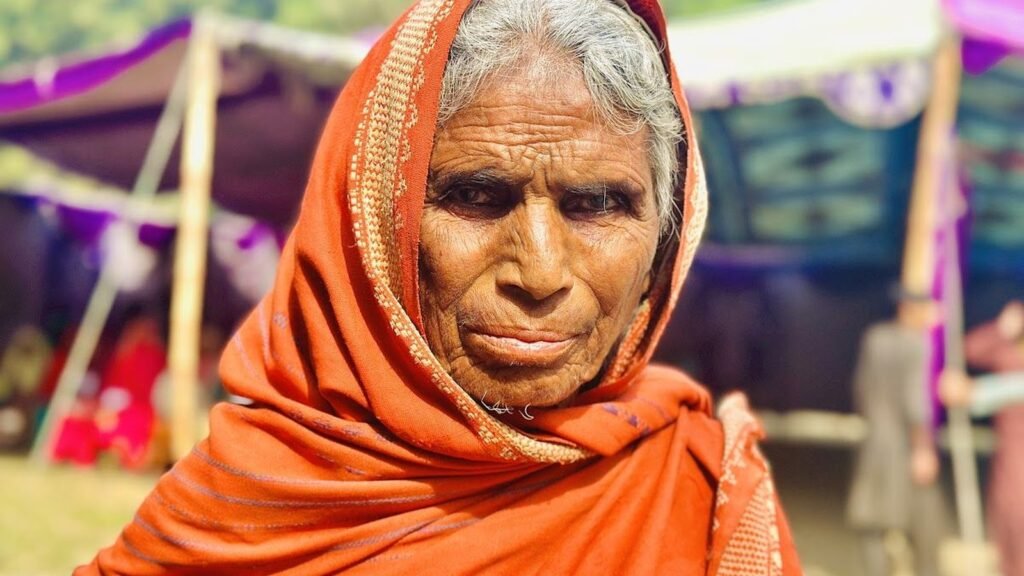
A striking number of people quietly decide they are not eligible to donate their eyes, and most of them are wrong. They are too old, they think, or their eyesight is too poor, or they take too many medicines, or they had an operation once. These beliefs are common, they are rarely challenged, and between them they remove a large number of willing donors who were never actually ineligible.
Why the myths are so consistent
Most people form their idea of donation from other kinds of transplant, where the rules genuinely are stricter. Organs such as kidneys and hearts must be viable and matched, and the criteria are demanding. The cornea works differently. It has no blood supply of its own, which is a large part of why matching is not required in the way people assume, and why a great many people who would be turned down as organ donors can still donate corneal tissue.
Age is the biggest misconception
The single most common reason people rule themselves out is age. They assume donation is something for the young, and that an eye in its seventies or eighties has nothing to give. This is simply not how corneal tissue is assessed. What matters is the condition of the cornea itself, which is evaluated after donation, not the number of years the person lived. Deciding in advance that you are too old removes a donation that might have been perfectly usable.
Poor eyesight does not rule you out
The second most common misconception is that bad vision means bad corneas. Most poor eyesight has nothing to do with the cornea at all. Short sight, long sight and astigmatism are about the shape and length of the eye. Cataract is the lens, sitting behind the cornea. Macular degeneration and diabetic damage affect the retina at the back. A person can have very poor vision from any of these and still have a clear, healthy cornea at the front.
Wearing glasses is not a disqualification
It follows from the above, but it is worth stating on its own because it stops so many people. Needing glasses says nothing about corneal health. Nor does having had cataract surgery in the past, which is a lens operation. These are among the most frequent reasons people give for not registering, and neither is a reason at all.
What genuinely does affect suitability
There are real criteria, and they exist to protect the person receiving the tissue. Certain infections that could be transmitted through transplantation, some diseases affecting the tissue itself, and certain conditions of the eye can mean corneas are not used. These are assessed properly at the time by the eye bank, against medical criteria, with the recipient’s safety as the deciding factor. That assessment is not something a person can usefully perform on themselves years in advance.
The principle worth holding onto
Eligibility is determined after donation, by people qualified to determine it, using the actual tissue. It is not determined in advance by the donor guessing. Somebody who pledges and turns out to be unsuitable has lost nothing at all. Somebody who never pledges because they assumed they were unsuitable may have removed a usable donation for no reason. Given that asymmetry, the sensible default is to pledge and let the assessment happen properly.
Why the timing is tight
Corneal tissue must be recovered within a limited period after death, which is why the family knowing in advance matters so much. A decision that has to be discovered, discussed and agreed while a family is grieving frequently runs out of time even when everyone would have agreed. A decision already known is simply acted upon.
What donation does not involve
Two fears come up constantly and both deserve a direct answer. Donation does not mean the eyes are taken while a person is alive, and it does not disfigure the face. The recovery is a precise procedure carried out by trained staff, and it is done in a way that allows normal funeral arrangements, including an open casket, to proceed. Families who expect the appearance to be altered are usually surprised that it is not.
The conversation that decides it
Whatever else is true, one thing is consistent. Families asked without warning tend to say no, and families who already knew tend to say yes. So the useful action is not only registering an intention but saying it out loud to the people who will be asked. It takes one sentence at an ordinary moment, and it is the difference between an intention and a donation.
Diabetes and long term medication
Two things people frequently assume disqualify them are having diabetes and taking regular medicines. Neither is an automatic barrier to corneal donation. Diabetes affects the retina, which sits at the back of the eye and is not the tissue being donated. Long term medication for blood pressure, cholesterol, thyroid conditions and many other things does not, of itself, make corneas unusable. As with everything else here, suitability is judged properly at the time rather than assumed in advance by the person.
What happens if you change your mind
A pledge is a statement of intention, not a contract that binds you. Someone who registers and later decides against it simply says so, and tells their family, exactly as they told them the first time. Nobody is held to a decision made years earlier. Knowing that removes a hesitation that stops some people registering at all, the fear that they are committing irrevocably to something they have not fully thought through.
Why families are asked even when a pledge exists
In practice the family is generally involved regardless of what the donor recorded, which surprises people who assumed their registration settled it. This is not the system disregarding the donor’s wishes. It is a recognition that recovery happens within hours, at a moment of acute distress, and that proceeding against a grieving family’s objection is not something anyone wants to do. It is the strongest practical argument for telling your family rather than relying on a form.
The one thing worth doing today
If you take nothing else from this, take the smallest possible action. Tell one person in your household, in a single ordinary sentence, that you would want to donate your eyes. Not a formal conversation, not a document, just a remark over tea that they will remember later. That sentence does more to produce an actual donation than a registration nobody knows about, because the family is who will be asked.
What happens to the tissue afterwards
People who are considering donation frequently want to know what actually happens next, and the honest answer is that a great deal of careful work sits between a donation and a restored eye. Tissue is recovered within a limited window, assessed against medical criteria, stored under controlled conditions and released only when it meets them. The eye bank and cornea lab handles that process. Knowing it exists tends to reassure people more than any reassurance offered in the abstract, because the worry underneath most hesitation is that a donation disappears into something unaccountable.
Why registering matters even though families are asked
If the family is consulted anyway, people reasonably ask what a registration achieves. It does two things. It records the intention somewhere other than memory, which matters when relatives disagree about what someone would have wanted. And the act of registering tends to prompt the conversation at home, which is the part that actually determines the outcome. Information on how to record a pledge sits on the eye donation page, and the registration is best treated as the beginning of the conversation rather than a substitute for it.
The one thing worth doing today
Take the smallest possible action. Tell one person in your household, in a single ordinary sentence, that you would want to donate your eyes. Not a formal conversation, not a document, just a remark they will remember later. That sentence does more to produce an actual donation than a registration nobody knows about, because the family is who will be asked. If you would also like to support the treatment side, where the constraint is funding rather than tissue, that is what a donation goes towards.
Have a question about your eyes?
PEBS Hospital in North Karachi can examine you and explain your options. Call the helpline on 021-36908053, or send a message and the team will reply.
This article is general information and does not replace an examination by an eye doctor.
